
A Mother’s Children Grieve Differently
Hillbilly ElegyThis emotional thread follows the family’s competing grief after Papaw and Mamaw die, revealing how love, entitlement, and old wounds shape mourning.
increasing Bearing strength in each event
 decreasing
Bearing strength in each eventdecreasingA Grandfather Shared

Loss Across Generations
The news reaches Lindsay
J.D. Vance tells Lindsay Leigh Lewis that Papaw has died. She collapses on the stairs, and they cry together as children who have lost the central man in their lives.
A parent remembered
Lindsay worries that she had taken advantage of Papaw by asking him to fix her car. J.D. Vance sees that her regret comes from the ordinary dependence of a child on a parent.
Their shared grief makes visible the parental role Papaw had filled for both of them.
The Funeral Tribute

Naming What He Was
A son without a father
J.D. Vance stands before the mourners and says he never had a dad, but Papaw was always there. He calls him the best father anyone could ask for.
A truth spoken publicly
The statement gives language to a relationship that had sustained him for years. It also marks Papaw’s funeral as a turning point in J.D. Vance’s understanding of family.
The tribute honors a grandfather by naming the work of fatherhood he performed.
Mom Claims the Greater Grief
Grief Becomes a Contest
An exclusionary claim
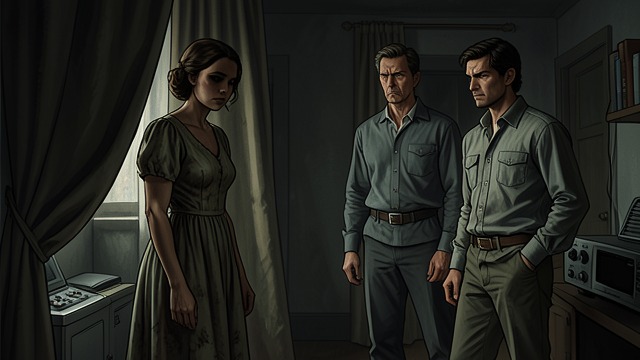
After Mamaw’s funeral, Mom tells J.D. Vance and Lindsay Leigh Lewis that they are too sad and that she has the greater right to grieve. She insists that Mamaw was her mother, not theirs.
Lindsay answers back
Lindsay says Mamaw was their mother too. J.D. Vance remains silent, but the reply expresses what years of dependence and love have made undeniable.
The argument exposes how Mom’s pain can become a claim that displaces everyone else’s.
Tears on the Mountain Road

Grief Finally Breaks Through
A close escape
Driving back to his Marine base, J.D. Vance loses control on a wet mountain road. The car stops before crossing the guardrail.
Mourning released
He imagines that Mamaw has protected him and finally breaks down in tears. The event gives his grief an opening after days of deliberate composure.
Fear, relief, and loss converge in a moment when he can no longer pretend to be untouched.
Remembering the One Who Stayed
Gratitude After Loss
Small memories endure
J.D. Vance recalls Mamaw’s protection, her letters, her insistence on education, and the practical care she gave him. These ordinary acts explain how close he came to a different life.
A legacy without certainty
He wonders where he would be without Mamaw and Papaw, and recognizes that his survival depended on people who intervened repeatedly. Gratitude does not erase the family’s pain.
Their presence remains the emotional foundation beneath his account of opportunity and change.
the night Papaw is found dead
at Papaw’s funeral
during the drive to Mamaw’s funeral in Kentucky
the day after Mamaw’s funeral
near the end of the book
